
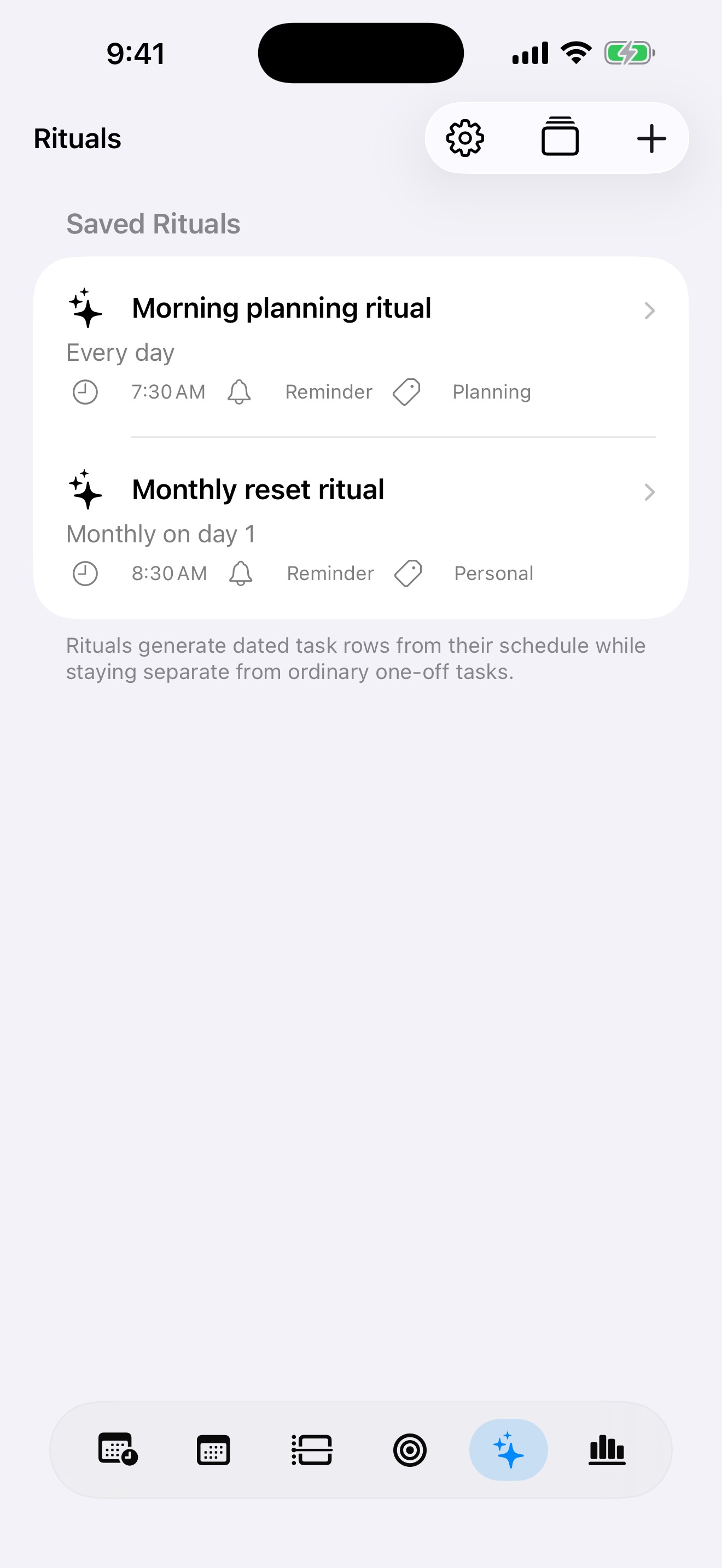
Name the moment you want to protect
A useful ritual starts with a moment that matters: a morning reset, weekly planning session, meditation break, date night, or regular household routine. Give it a name that makes the intended action obvious when it appears in your day.
Keep the first version simple. You can add notes, a tag, a priority, and timing details when they help, but the ritual should remain easy to understand at a glance.
Choose a cadence that matches reality
myDailyTasks rituals can repeat daily, on selected weekdays, or on selected days of the month. Choose the pattern that reflects when you can realistically follow through rather than the frequency you think you should achieve.
If timing matters, add a scheduled time and an optional duration. A reminder can provide a prompt when the ritual has a time, while travel time can reserve the space needed before or after an activity.
Let each occurrence become part of the plan
The ritual definition stays separate from one-off work, while each scheduled occurrence becomes a dated task in the normal planner. That means you can plan it beside appointments and other tasks without recreating the routine every time.
Past open ritual occurrences are recorded as incomplete instead of rolling forward like ordinary unfinished work. Away periods can pause future ritual scheduling, so the pattern can reflect holidays and other deliberate breaks.