
Use the five-decision daily reset worksheet
Start with the areas that need attention
Choose a small set of useful areas such as Work, Home, or Health. Tags can keep those contexts visible without creating a separate system for every responsibility.
Capture concrete actions inside those areas. Replace a vague concern such as “sort out the house” with a next action you can start, such as “book the electrician” or “clear the kitchen bench”.
Choose what belongs today
Not everything you care about belongs in the current day. Use priority and rank to choose the work that matters now, then keep the wider list available without asking it to compete for attention.
Today provides a focused place for the selected day. Date navigation, week views, and Smart Lists keep other work findable when you need to plan ahead or review what changed.
Give scheduled work a visible place
Use Daily Planning for appointments, meetings, and tasks that need a specific block of time. Flexible work can remain unscheduled until you know where it fits.
A visible timeline helps you notice competing commitments, unrealistic durations, and the spaces that should remain open before the day begins.
Turn repeated responsibilities into Rituals
Use a Ritual when an action follows a daily, weekly, or monthly pattern. The recurring definition stays separate while each dated occurrence joins the normal plan.
Choose a cadence that reflects real life. Away periods and missed-occurrence handling allow a routine to pause or change without filling future days with noise.
Connect longer goals to dated actions
A 90-day goal becomes useful when it produces something you can do next. myDailyTasks supports measurable and routine goals that create dated tasks while keeping goal-level progress separate.
Review those actions with the rest of the week so the goal remains connected to actual time rather than sitting outside the daily plan.
Review the week before moving work forward
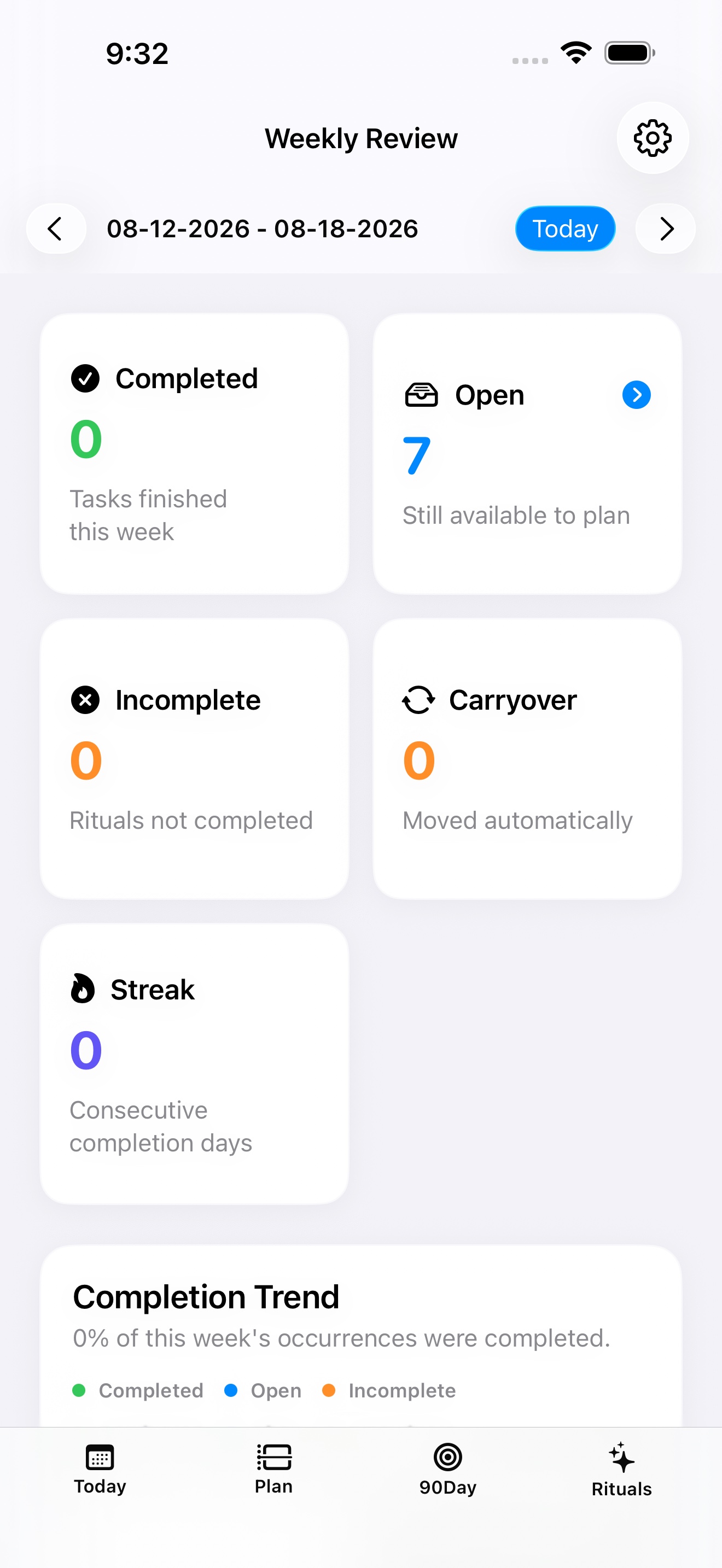
Use Weekly Review to look at completed and open tasks, incomplete Ritual occurrences, tag balance, carryover, streaks, and weekly wins. Decide what still matters, what needs a different date, and what can be removed.
The loop is intentionally small: capture, choose, schedule where needed, follow through, and review. Organisation becomes a repeated decision rather than a one-time attempt to control everything.