
Choose a goal you can describe clearly
A measurable goal tracks a quantity, such as completing twelve training sessions. A routine goal tracks a repeated action, such as practising three times each week.
Name the result, the unit or action, and the period you intend to review. The 90-day window provides structure, but it does not guarantee that a particular goal or pace is right for you.
Define what progress means
Choose the target, pace, cadence, start date, and timeframe that match the goal. Keep the measure connected to an action you control rather than an outcome that depends entirely on someone else.
myDailyTasks keeps goal-level progress separate from the completion state of the daily tasks it creates.
Create the next dated action
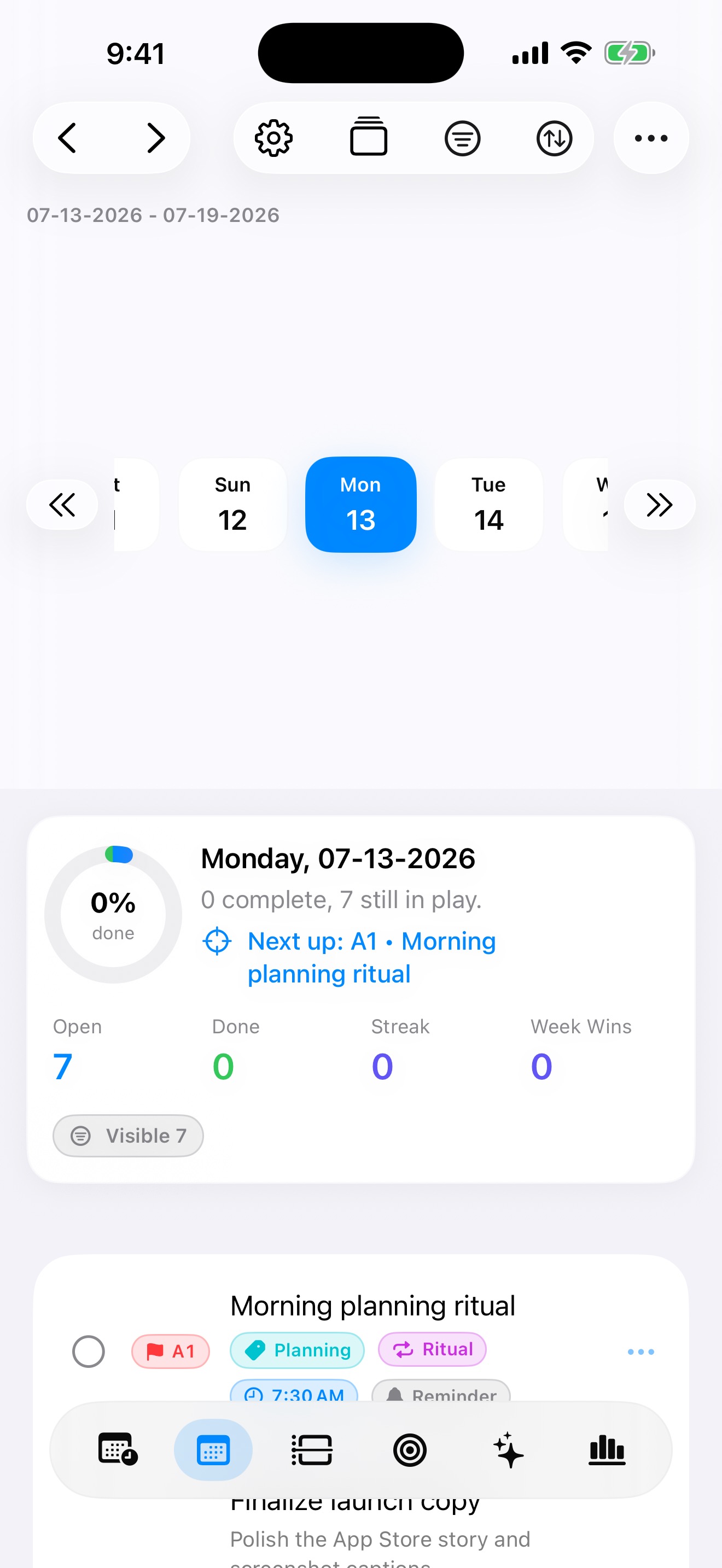
Longer goals move when the next action enters the same plan as ordinary work. Generated goal tasks appear on their intended days, where they can be prioritised, scheduled, completed, or adjusted.
Use Daily Planning when an action needs a real block of time. Leave it flexible when the day offers several possible places to complete it.
Review progress each week
Weekly Review can show how goal-related tasks sit beside other commitments. Look at completed and open tasks, tag balance, carryover, streaks, and weekly wins.
Use the 90Day Planner's separate progress view to assess the pace of the larger goal.
A missed action is information. Adjust the next action, cadence, or timing instead of abandoning the goal or hiding the unfinished work.
Keep today's plan usable
A long goal should support today's choices, not fill every day with generated work. Start with a cadence you can see fitting into a normal week, then review before increasing it.
The useful chain is simple: define the goal, create the dated action, give it time when needed, complete or adjust it, and review the pattern.